

Sometimes your mind knows you are safe, while your body is still on high alert. Heart rate up. Breath shallow. Muscles tense. Startle responses without any clear reason. Many people with PTSD recognise that tension: rationally you know one thing, physically you are living something else.
That is not weakness, and it is not a lack of insight. It shows that trauma is not only a story held in the mind — it is also an experience stored in the body.
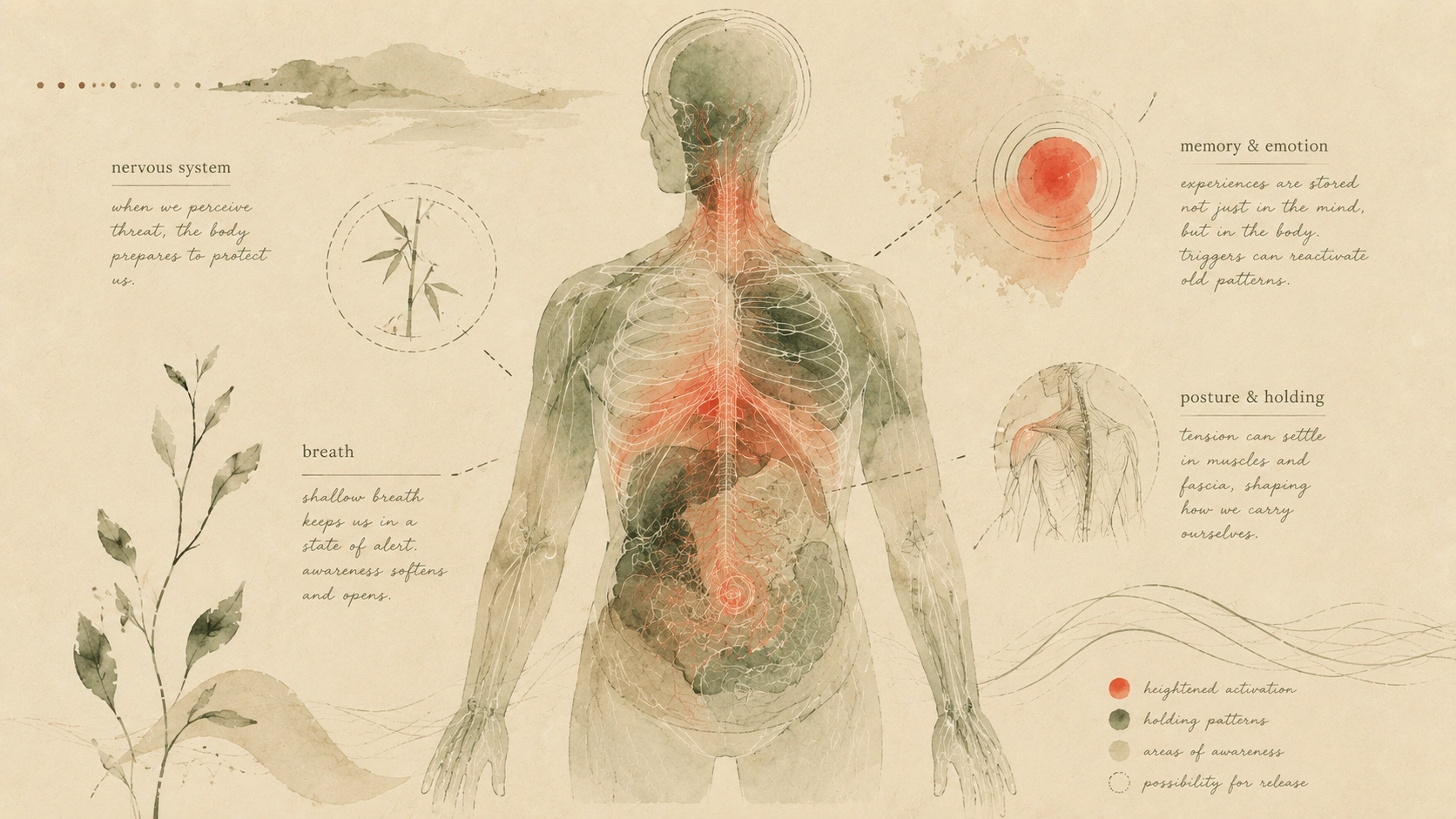
Why the body remembers trauma#
Trauma is more than memory. It is also a pattern of stress responses that can remain active in the nervous system. The body learns to stay alert, to avoid, to freeze or to be constantly ready.
This can show up in many forms: tense muscles, shallow breathing high in the chest, sleep that breaks easily, digestive complaints, startle responses, exhaustion that no rest seems to lift, or periods of numbness where nothing comes through.
The body is not trying to be difficult. It is trying to protect you.
Body memory: what do we mean by that?#
By body memory we do not mean that muscles literally store memories like a videotape. It refers to learned patterns in the nervous system, posture, reflexes, breathing and associations.
The body sometimes responds faster than words can follow.
Trauma is not what happens to you, but what happens inside you as a result of it.
Gabor Maté
Science and bodily experience#
Researchers such as Bessel van der Kolk have described how trauma expresses itself through the body and nervous system. Modern insights around interoception, embodied cognition and stress physiology support the understanding that body and mind are not separate worlds.
Moral injury and the body#
Moral injury often involves guilt, shame or betrayal. These too leave physical traces: pressure on the chest, tension in the abdomen, insomnia, restlessness, a tendency to withdraw from others.
The body responds not only to danger, but also to meaning.
What helps in recovery?#
Recovery often requires more than talking alone. Different pathways can contribute: breathing exercises and walking; strength work and other movement; therapy, including body-oriented forms; the restoration of rhythm and sleep; safe relationships; and the calm that silence or nature can bring. No single path works for everyone, and few people find recovery along only one of them.
Small signs of recovery#
Sometimes recovery begins with small things — breathing out a little more deeply, sleeping more soundly, being startled less easily. Hunger returning. Allowing yourself to relax. Being able to stay present in contact with another person without immediately needing to withdraw.
Read also#
Conclusion#
The body is not your enemy. It often carries precisely the traces of what you have been through. Those who learn to listen to these signals discover something important: beneath the tension, the capacity for recovery is also alive.