

Some insights do not only change what you think, but also how you understand yourself. Candace Pert’s work was one of those insights for me. For the first time, I read in scientific language something I recognized in my body every day: my mind could know that something was over, while my body still carried tension, sadness, or threat.
In doing so, she gave words to an experience many people with trauma recognize. Sometimes the body continues living in a reality the mind has long since left behind.
Who Was Candace Pert?#
Candace Pert was a neuropharmacologist who became known for her role in the discovery of the opiate receptor. Her work contributed to a broader shift in how people think about body and mind.
Later, she became internationally known through her book Molecules of Emotion (1997), in which she described how emotions are connected to messenger molecules, receptors, and communication processes throughout the body.
Why Her Work Was Groundbreaking#
For a long time, popular culture — and sometimes healthcare as well — treated emotions as something that existed mainly “in the head.” As if feeling were primarily a mental phenomenon.
Pert showed that this view was too limited.
Receptors for signaling molecules are found not only in the brain, but throughout the body. That does not mean your knee literally thinks the way a brain does. But it does mean emotional processes are physically embedded, and that body and brain are constantly communicating with one another.
For many people, that insight was revolutionary.
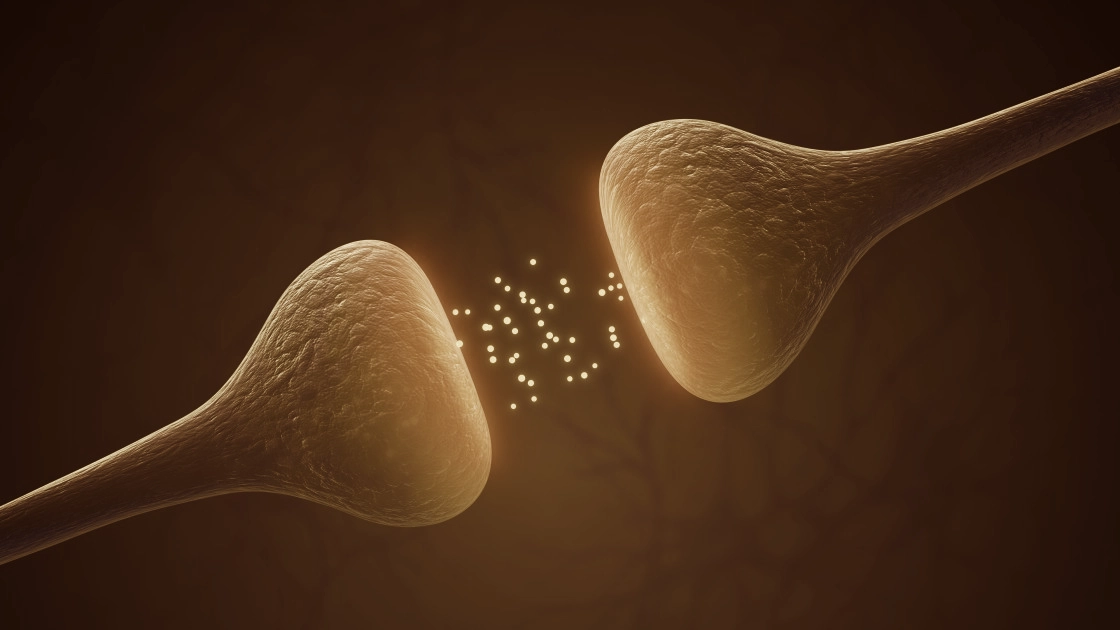
Neurotransmitters, Neuropeptides, and Receptors#
Put simply:
- Neurotransmitters help nerve cells communicate with one another.
- Neuropeptides are signaling molecules involved in regulation, mood, and stress responses.
- Receptors are the receivers that recognize and respond to these signals.
Through these systems, experience, stress, and emotion influence the entire organism.
Your Body Is Your Unconscious Mind#
For me, that sentence captures why Pert matters so much.
What we cannot fully express in words often still appears through the body: tension in the stomach, pressure on the chest, clenched jaws, sudden sadness, restlessness without a clear reason, relief after an emotional release.
The body speaks a language older than words.
What This Means for Trauma#
With PTSD and other trauma-related conditions, many people experience a gap between understanding and feeling.
They think: I am safe. It is over. I know better now. But the body answers in another language — startle reactions, avoidance, insomnia, shallow breathing, tension, withdrawal.
That does not mean someone is failing. It means recovery cannot be purely cognitive. The body must be able to move along with it.
Understanding Body Memory Carefully#
When people say trauma is stored in the body, they usually do not mean memories are literally stored inside muscles like files in an archive.
A more accurate way to say it is this:
Trauma leaves traces in patterns of activation, association, posture, reflexes, hormonal responses, and perception. The body has learned how to survive.
And what has been learned can also be learned differently.
Connection to Modern Insights#
Much contemporary research aligns with the direction Pert helped open up:
- Embodied cognition: thinking is embodied.
- Interoception: perceiving internal bodily signals.
- Polyvagal theory: safety shapes behavior and connection.
- Gut-brain communication: mood and physiology influence one another.
The language differs, but the movement is similar: away from a view of human beings in which the mind alone is in control.
Why This Became a Common Thread in My Work#
Pert’s work did not just give me a theory. It gave me recognition.
I no longer had to choose between “it’s all in your head” or “it’s all in your body.” That division never really fit. A human being is one whole.
That insight runs like a thread through everything I write about trauma, recovery, silence, breathing, grief, and moral injury.
What Helps in Practice?#
If emotions and stress also live physically, then physical approaches to recovery often help as well: breath regulation, walking, strength training or other movement, sleep restoration, safe relationships, body-oriented therapy, rhythm and routine, and time in nature or stillness. Not as tricks. As relearning safety.
Criticism and Nuance#
As with much pioneering work, some popular interpretations of Pert’s ideas were later simplified or exaggerated. That is why careful wording still matters.
But her central contribution remains valuable: body and emotion are far more deeply intertwined than was long assumed.
Read Also#
Conclusion#
Candace Pert helped make visible what many people already felt: your body participates in everything you experience. It carries tension, joy, loss, and recovery — not as a machine, but as a living system.
Perhaps your body knew certain things long before you could explain them. Sometimes healing begins exactly there: where experience finally receives recognition.