What is the difference between PTSD, CPTSD and moral injury? On fear, guilt, shame and the restoration of the stress and conscience system.
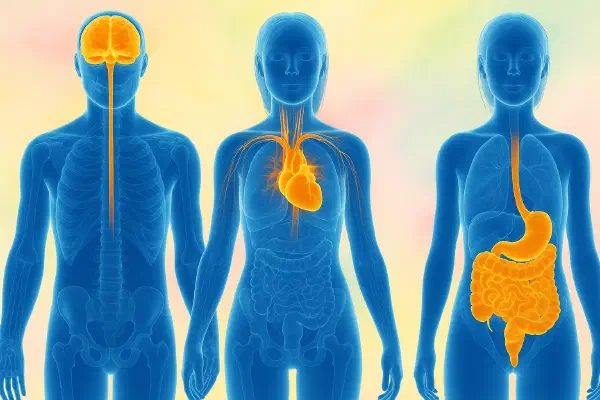
Discover how head, heart, and gut work together in stress, PTSD, and recovery. A practical model for greater inner balance and self-regulation.
In PTSD and moral injury, trauma lives not only in the mind but also in the body. On body memory, regulation and recovery through the nervous system.
The Law of Four from Gurdjieff's Fourth Way explains how perception and reaction move through body, emotion and thought — and what trauma breaks in that cycle.
What is post-traumatic growth? On PTSD, moral injury, compassion, meaning and how a person sometimes changes after disruption.
Overview of body-oriented therapies for PTSD and moral injury: Somatic Experiencing, Sensorimotor Psychotherapy, trauma-sensitive yoga, TRE, haptotherapy, Feldenkrais, bioenergetics, massage, equine-assisted therapy, and Pesso Boyden — including personal experience.
An explanation of Stephen Porges’ Polyvagal Theory: ventral, sympathetic, and dorsal vagal states. Including links to PTSD, moral injury, mystical traditions, and practical nervous system exercises.
Neuroplasticity in complex PTSD and moral injury: how new experiences and conscious behavior help the brain recover and create space.
A stable daily rhythm helps with PTSD and chronic stress. About sleep, cortisol, light, movement, and how structure stabilizes the nervous system.
Breathing in PTSD helps regulate the nervous system. Discover biofeedback, HRV, the vagus nerve, practical exercises, and recovery after trauma.