

For some people, the tension truly begins when everything becomes quiet.
During the day, it is still possible to stay occupied. Work. Conversations. Distraction. Structure. But when evening falls and the world slows down, something else appears. Restlessness. Memories. Hypervigilance. Nightmares. A body that refuses to sleep, as if sleep itself has become unsafe.
Many people with post-traumatic stress disorder recognize this. People living with moral injury often experience the night not as a place of recovery, but as a territory where guilt, loss, fear, or inner conflict return.
That is not strange. Sleep requires surrender. And that exact capacity is often damaged by trauma.
Why Sleep Is Essential in PTSD and Moral Injury#
Sleep is not a luxury. It is biological recovery work.
During sleep, the body repairs itself, the brain processes information, and the nervous system regulates emotions. Without sufficient sleep, people become more dysregulated, anxious, emotionally reactive, and physically exhausted.
With trauma, that cycle is often reversed:
- trauma disrupts sleep
- poor sleep increases stress
- stress increases hypervigilance
- hypervigilance disrupts sleep again
A vicious cycle develops.
According to Matthew Walker, author of Why We Sleep, sleep is fundamental for emotional processing, memory, immune function, and psychological recovery. Walker even describes sleep as “the overnight therapy of the brain.” That image fits trauma remarkably well.
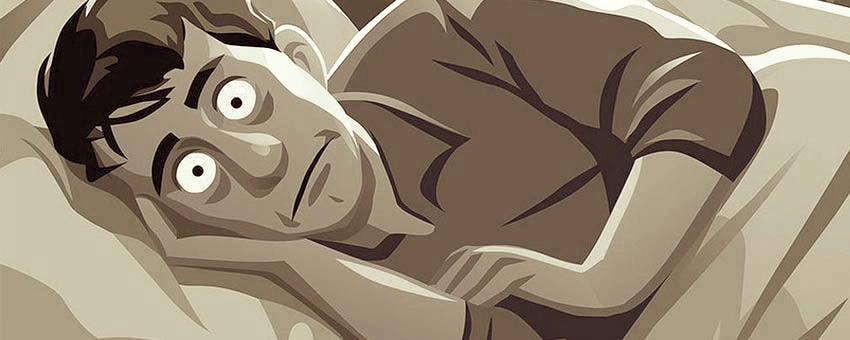
The Brain Stays Awake While You Try to Sleep#
Many people with PTSD technically do sleep, but not deeply enough. The nervous system continues scanning for danger. Small sounds are still registered. The body remains tense. Heart rate does not fully settle. People often wake at the same times every night or jolt awake from dreams.
From the outside, someone appears to be resting. Inside, part of the system remains on guard.
That explains why some people sleep eight hours and still wake up exhausted. The body has been lying down, but it has barely truly recovered.
What Happens During Healthy Sleep?#
Sleep consists of different stages that cycle throughout the night.
Deep Sleep#
During deep sleep, the body physically restores itself:
- muscles relax
- the immune system works
- the brain “cleans up”
- stress hormones decrease
Walker describes how, during deep sleep, waste products are cleared from the brain through the glymphatic system. As if the brain is literally being rinsed clean at night.
REM Sleep#
During REM sleep — the phase in which most dreaming occurs — the brain processes emotions and memories. In healthy processing, experiences are revisited in a relatively safe neurochemical state.
This is crucial. Trauma is not just memory. It is memory still experienced as present danger. REM sleep normally helps emotional intensity soften over time. But with PTSD, that process is often disrupted.
Nightmares: The Brain Trying to Process#
Nightmares are often treated as an unpleasant symptom. But trauma research suggests they are also an attempt by the brain to process overwhelming experiences.
The problem is that the system gets stuck. The dream does not move someone toward integration, but repeatedly pulls them back into the trauma.
People may dream about:
- being chased
- helplessness
- war
- loss of control
- death
- guilt
- failure
- abandonment
Sometimes the dreams are literally traumatic. Sometimes symbolic. But almost always they revolve around unsafety, loss of control, or unresolved tension.
Moral Injury and Nighttime Guilt#
With moral injury, nightmares often take on a different character. Fear is not the only central theme — conscience is involved as well. People may dream about:
- people they could not help
- mistakes they made
- faces of victims
- abandoned situations
- betrayal
- judgment
- recurring choices
Some people wake with overwhelming guilt without remembering the dream itself. As if the body remembers the emotion while the narrative has disappeared.
That often makes moral injury more existential than classical fear-based trauma. The night becomes not only a place of danger, but also confrontation with oneself.
Personal#
I too have known periods where I fought sleep during the day, and fought to stay awake at night.
Why Dreams Became So Meaningful in Mystical Traditions#
Long before neuroscience existed, spiritual traditions already viewed dreams as meaningful. Not always literally prophetic, but as mirrors of the soul. In many ancient traditions, sleep was seen as a transitional state in which the ordinary control of the ego temporarily softens.
Dreams as Messages#
In Christianity, Sufism, Judaism, and ancient Greek traditions, dreams often appear as carriers of insight or warning. In Islamic mysticism, some dreams were seen as meeting places between consciousness and deeper truth.
Carl Jung later partly built on this idea: dreams do not merely present random images, but symbols of inner processes.
The Night as Mirror#
Mystical traditions often describe the night as a space where hidden parts of the human being become visible. That does not mean every dream must be interpreted literally. But dreams sometimes reveal what is suppressed during the day: grief, fear, guilt, longing, unresolved loss, or even hope.
Gurdjieff and the Sleeping Human Being#
George Ivanovich Gurdjieff spoke about human beings as creatures who are largely “asleep” while believing themselves awake. According to him, people often live automatically, driven by emotions, impulses, and conditioning.
Trauma intensifies this even further. A traumatized nervous system often lives reactively — not through conscious choice, but through automatic survival responses. That includes the night.
From this perspective, recovery is not only symptom reduction, but a form of awakening: learning to become present again in body, feeling, and awareness. Perhaps that is why some people experience moments just before sleep or just after waking as unusually open or vulnerable. The controlling layer of the day is thinner there.
Why Sleep Safety Matters So Much#
People with trauma often try to maintain control. That makes sense. But sleep requires the opposite: letting go.
That is why sleep recovery usually does not happen through discipline alone, but through safety. Not only mental safety, but physical safety as well. The nervous system must slowly relearn: the night is no longer a battlefield.
Practical Approaches for Better Sleep with PTSD#
There is no magical solution. But certain patterns help many people.
1. Reduce Hyperactivation Before Sleep#
Avoid bright screens, intense discussions, or constant stimulation right before bed. The nervous system needs transition time.
2. Use Rituals#
Rituals create predictability: tea, showering, breathing exercises, calm music, reading, candlelight, silence. Small repeated actions help the body recognize that the day is ending.
3. Lengthen the Exhale#
A longer exhale often activates the parasympathetic nervous system. For example: inhale for four counts, exhale for six or eight. Simple, but biologically effective.
4. Do Not Immediately Treat Nightmares as the Enemy#
That may sound strange. But the harder people fight dreams, the more tension develops. Curiosity sometimes helps more than control:
“What is my system trying to show me?”
5. Seek Professional Help if Sleep Remains Chronically Disrupted#
Chronic insomnia and recurring nightmares are not something people should “just get over.” Trauma therapy, EMDR, body-oriented therapy, or sleep-focused treatment can make a real difference.
The Paradox of Sleep and Trauma#
Sleep is vulnerability. That is precisely why trauma affects sleep so deeply. A body expecting danger does not want to fully relax.
That is not dysfunction. It is an intelligent survival system that remained active for too long.
Recovery often begins when people stop judging themselves for their dysregulation. Not:
“Why can’t I sleep?”
But:
“What is my nervous system trying to protect?”
That question changes something.
Frequently Asked Questions#
Why do I wake up exhausted even though I slept?#
With PTSD, the nervous system often remains in a subtle state of vigilance even during sleep. Deep sleep becomes shorter and heart rate does not settle as fully. The body lies down, but recovers less. Discuss this with your therapist or physician. Sometimes a sleep study reveals more than subjective experience alone.
Do sleep medication or melatonin help?#
Sometimes temporarily, but usually only as a bridge alongside other treatment. Sleep medication often suppresses deep sleep and REM sleep rather than restoring them. Discuss it with your doctor and be cautious with long-term use.
What helps with recurring nightmares?#
For persistent PTSD nightmares, Imagery Rehearsal Therapy (IRT) can help. This method involves rehearsing a different ending to the dream during the day. EMDR, body-oriented therapy, and in some cases prazosin are also used. Do this under professional guidance.
Can I learn to live with nightmares without trying to “eliminate” them?#
Yes. For many people, curiosity brings more calm than resistance. Keeping a dream journal without judgment, or briefly writing down the dream in the morning, can help the brain process without needing to fully understand everything.
My partner has PTSD and sleeps badly — what can I do?#
The most important thing is not to create pressure. Talk during the day, not in the middle of the night. Support rituals without forcing them. Recognize that sleep problems are not “dramatic behavior,” but a physiological consequence of trauma. And take care of your own sleep as well — co-regulation works both ways.
Conclusion: The Night as a Place of Recovery and Confrontation#
For people with PTSD and moral injury, sleep is rarely just biological. The night touches safety, control, memory, guilt, and surrender. Sometimes the night becomes a mirror of what remains hidden during the day.
Yet sleep also remains one of the most powerful sources of recovery we have. Not because sleep solves everything, but because body and mind attempt to restore balance there.
Perhaps that is the deepest message of sleep: even after dysregulation and loss, human beings still carry a capacity for recovery within them — even when they themselves can barely believe it anymore.
Further Reading#
- Polyvagal Theory of Porges — why the nervous system does not simply “switch off”
- Daily Rhythm and PTSD — how daytime rhythm prepares the night
- Breathing and PTSD — practical building blocks for nervous system regulation
Sources and Scientific Publications#
- Walker, M. (2017). Why We Sleep
- Van der Kolk, B. (2014). The Body Keeps the Score
- Germain, A. Sleep Disturbances as the Hallmark of PTSD
- Nielsen, T. & Levin, R. Nightmares: A New Neurocognitive Model
- Krakow, B. — research on nightmares and trauma (including Imagery Rehearsal Therapy)
- Hobson, J.A. — sleep and dream research
- Jung, C.G. — work on dreams and symbolism
Questions?#
Do you recognize this in yourself or in your work with others? Use the contact form to get in touch with me.