

The Fourth Way is a spiritual and practical path of development created by George Ivanovitch Gurdjieff (1866–1949). Unlike many spiritual traditions, it does not seek withdrawal from the world, but instead works within ordinary life. Its starting point is becoming conscious by bringing thought, feeling, and action into alignment. Today, the Fourth Way also proves useful as a framework for personal development, stress regulation, and recovery after trauma.
Introduction: a path in the middle of life#
There are spiritual paths that withdraw from the world. Monasteries. Caves. Silence.
Gurdjieff’s Fourth Way takes a different direction. Not withdrawal, but ordinary life as the field of practice. Work, relationships, exhaustion, conflict — precisely there the work must happen.
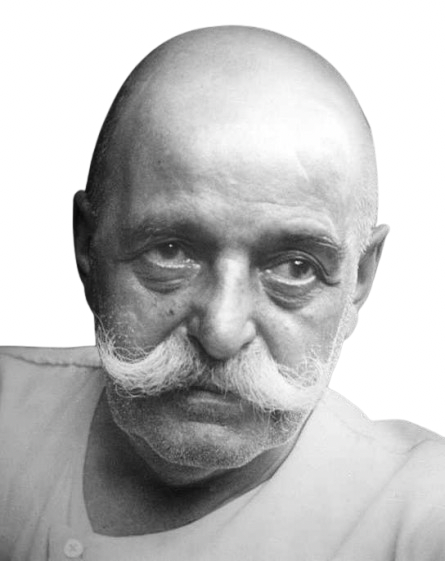
The Armenian-Greek mystic G.I. Gurdjieff (1866–1949) argued that human beings mostly live mechanically. We react automatically. Thinking, feeling, and doing operate separately from one another. His answer was not a belief system, but a practice of consciousness: integrating head, heart, and body in daily life.
In an age of stress, PTSD, and moral confusion, his approach feels surprisingly relevant. Not as therapy in the clinical sense, but as an art of living. As a path of recovery.
What is the Fourth Way?#
Gurdjieff distinguished three traditional spiritual paths:
- The way of the fakir — through the body
- The way of the monk — through the heart (devotion)
- The way of the yogi — through thought
The Fourth Way combines all three. Not in isolation, but in ordinary life. Work and relationships are not obstacles, but fuel for inner development.
Much of what we know about the Fourth Way today comes through P.D. Ouspensky, a Russian thinker who worked with Gurdjieff for many years. His book In Search of the Miraculous remains the most accessible introduction to this teaching.
Four core principles#
The Fourth Way rests on several foundational ideas. Here are four of them.
1. Mechanicalness: living on autopilot#
According to Gurdjieff, human beings mostly live “asleep.” By mechanicalness he meant acting automatically, without awareness. A stimulus appears, a thought follows, an emotion ignites, the body joins in, and everything happens by itself.
Modern neuroscience describes something similar. Research into automatic threat responses (LeDoux, 2012) shows that the brain reacts to danger signals extremely quickly and largely outside conscious awareness. In PTSD this system becomes hypersensitive. The body reacts before thought can regulate the response.
The Fourth Way attempts to make that automatic chain visible. Not to suppress reactions, but to add a layer of awareness to them.
2. Self-remembering: being present while doing something#
Self-remembering is perhaps the most distinctive concept of the Fourth Way. It is not meditation. Nor is it an extra layer of thinking. It is something that takes place alongside ordinary activity.
An example. You are washing dishes. Normally you notice the plate and the soap while the rest of your attention drifts elsewhere — to plans, worries, or an earlier conversation. Self-remembering means: feeling your feet on the ground, knowing that you are standing there washing dishes, and seeing the plate at the same time. Two things simultaneously: attention to the activity, and awareness that you are the one doing it.
It sounds simple. In practice it disappears within seconds. The practice lies precisely in returning to it.
3. The three centers: head, heart, and body#
Gurdjieff viewed the human being as composed of three centers, each with its own pace and language:
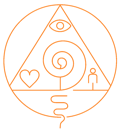
- the intellectual center (thinking)
- the emotional center (feeling)
- the moving and instinctive center (body)
In a healthy life these three work together. Under stress, trauma, or overstimulation they become disconnected. The head analyzes, the body reacts, the heart withdraws, and none of them knows what the others are doing.
Development does not mean strengthening one center, but restoring coherence between them. For a neuroscientific translation of this idea, see Three Brains, One Human.
4. Conscious effort: fine-tuned attention#
Conscious effort is different from willpower. Willpower pushes; conscious effort guides. Willpower exhausts itself; conscious effort trains itself. The difference lies in the quality of attention brought to the action.
A simple example: walking up stairs for five minutes with awareness of breath and posture burns the same calories as running up absentmindedly. But it develops something different. Not just fitness, but the habit of remaining present while something is difficult.
For someone recovering from trauma, this becomes a key skill: learning to stay with tension without drowning in it or fleeing from it.
The many “I”s: the inner crowd#
One of Gurdjieff’s sharpest observations was that human beings do not possess a single fixed “I.” What we call “I” is actually a shifting collection of moods, roles, and voices. The morning self wants to exercise. The evening self wants chips. One “I” makes a promise; another has to live with it.
For readers with PTSD or complex trauma, this image is immediately recognizable. Trauma research describes something similar as structural dissociation: parts of the personality functioning separately from one another (Van der Hart et al., 2006). These parts are not a disease, but the way a human being survives under pressure.
The Fourth Way does not ask you to “eliminate” these parts. It asks you to see them. Only from that seeing can something like a conscious center emerge that connects them.
The stop exercise: a practical technique#
One of Gurdjieff’s best-known exercises is surprisingly simple: stop in the middle of an action. Unexpectedly. Whatever posture you are in. Then observe what happens in your body, breath, and thoughts.
The exercise works for two reasons.
First, it reveals how automatic behavior actually is. Only when you do not continue do you notice how strong the urge is to keep going.
Second, it creates a brief space of awareness. A break in the usual chain of stimulus-response-stimulus-response. That break is exactly where the Fourth Way does its work.
In modern terms this could be called an interoceptive pause: a moment in which you notice what is happening in your body before acting again. For people with an overstimulated nervous system, this can become a valuable building block if applied carefully.
What do the movements mean?#
One of the most characteristic parts of Gurdjieff’s work are the movements: complex rhythmic movement sequences performed in groups and accompanied by music.
At first glance they resemble dance or gymnastics. In reality they are designed to activate multiple centers simultaneously. A participant must:
- perform a specific movement
- follow the rhythm
- divide attention
- observe inwardly
This requires concentration, coordination, and emotional involvement at the same time.
Although there is little direct research on the movements themselves, studies of rhythmic movement interventions in trauma show similar effects. Body-oriented therapies and dance interventions can contribute to nervous system regulation and reduction of dissociation (Koch et al., 2019). Ordinary forms of movement, such as sports and walking, move in the same direction: reconnecting attention and body.
The movements can be understood as a form of integrated training of attention, movement, and emotion — a practical form of neuroplasticity.
The Fourth Way and PTSD#
For people with PTSD, fragmentation is a familiar experience. The body reacts, the head analyzes, the heart shuts down or becomes overwhelmed.
The Fourth Way does not offer trauma therapy, but it does offer a framework:
1. Integration of centers#
Recovery is not only about understanding what happened, but also about learning to inhabit the body again. This aligns with the insights of Bessel van der Kolk (2014): trauma lives in the body and requires bodily integration.
2. Rhythm and structure#
Gurdjieff emphasized regularity in sleep, work, and practice. Modern sleep science shows that rhythm is crucial for stress regulation (Walker, 2017). Structure calms the nervous system. See also Daily Rhythm and PTSD.
3. Conscious effort#
Instead of automatic avoidance, one learns to remain present with tension without drowning in it. This resembles expanding the window of tolerance: the zone in which you can tolerate stress without freezing or panicking (Siegel, 1999).
The Fourth Way can therefore serve as a complementary life practice alongside regular therapy. The connection with neuroplasticity suggests that practice can genuinely support change in the brain.
Moral injury and inner division#
Moral injury arises when someone acts against their own values or witnesses moral violations. The result is often guilt, shame, and loss of meaning.
Gurdjieff spoke about inner contradictions: parts within us that oppose each other. He did not see moral tension as failure, but as material for awareness.
The Fourth Way invites us to observe this tension without completely identifying with it. Not reducing yourself to your mistake, but not denying it either. That requires courage and attention. Working through grief connected to moral injury is an essential part of that process.
Modern research into recovery from moral injury emphasizes meaning-making, community, and integration of experience. Here Gurdjieff’s work touches contemporary psychology.
Similarities with Michaël Derkse’s Pulsar Vision#
The Pulsar Vision of Michaël Derkse describes development as a rhythmic movement of impulse, expression, reflection, and integration. Growth does not unfold linearly, but in waves.
This closely aligns with the Fourth Way:
- Both emphasize rhythm
- Both see moments of rupture as opportunities for deepening
- Both recognize that setbacks are part of development
Where Gurdjieff speaks about effort and remembrance, Pulsar speaks about consciously moving through developmental waves. Both approaches view life itself as the teacher.
What the Fourth Way is not#
For balance, several important caveats should be stated clearly.
- It is not a replacement for therapy. With PTSD, complex trauma, or moral injury, professional treatment is almost always necessary. The Fourth Way can be a supportive practice, not an alternative.
- It is not a scientifically validated method. Many exercises, including the movements, have never been systematically researched. The overlap with trauma science is plausible, but not the same as proof.
- Gurdjieff was controversial. His methods could be harsh, and some followers allowed group dynamics to become unhealthy. Anyone exploring this path should remain critical and never place authority above common sense.
- A teacher is not essential, but not irrelevant either. Much of the work can be practiced alone. For movements and group work, however, an experienced teacher is advisable.
Practical ways to apply it daily#
What does this look like in practice?
Morning#
- Wake up at a fixed time
- Spend a few minutes feeling the breath and body
- Do not begin the day immediately with screens
During the day#
- Observe automatic reactions
- Bring attention to posture and breath
- Create short moments of self-remembering
- Try a stop exercise once in a while
Evening#
- Reflect without judgment
- Consciously calm the rhythm of the day
- Reduce stimulation
Small repeated actions build inner stability.
Scientific connections#
Although the Fourth Way itself is not a scientific program, there are clear overlaps with modern research:
- LeDoux (2012): automatic threat circuits
- Bessel van der Kolk (2014): the body as a storage place for trauma
- Koch (2019): rhythmic movement and regulation
- Siegel (1999): integration of brain systems
- Walker (2017): rhythm and sleep recovery
- Pert (1997): emotions as body-wide signals — see Candace Pert and trauma
These insights underline that integrating body, emotion, and attention is essential for recovery.
The Fourth Way as an art of living#
The Fourth Way is not a theory to study, but a practice to live. Here, the art of living means:
- attention in action
- honesty toward inner division
- rhythm instead of chaos
- integration of head, heart, and body
It does not require perfection. It requires practice.
Frequently asked questions#
Is the Fourth Way a religion?#
No. There are no doctrines or rituals you must follow in order to “belong.” The teaching does touch questions that religions also ask: who am I, why am I here, how do I wake up? But it is a method of work, not a belief system.
Can I practice the Fourth Way without a teacher?#
Largely, yes. Self-observation, self-remembering, and the stop exercise can all be practiced alone. For the movements and certain group exercises, an experienced teacher is recommended. Start modestly, read Ouspensky, and only later consider finding a teacher if needed.
What is the difference between the Fourth Way and mindfulness?#
Mindfulness mainly focuses on awareness of the present moment, often in silence. The Fourth Way focuses on awareness while in action — washing dishes, working, talking. Mindfulness is more an attitude of observation; self-remembering adds an active awareness of oneself. The two can complement each other well.
Does the Fourth Way help with PTSD?#
Not as therapy, but as a practice alongside treatment. Its attention to body, rhythm, and the development of awareness overlaps with much that is important in trauma recovery. Begin more intensive exercises, such as the stop exercise or prolonged self-observation, only when your nervous system has enough stability for it. Discuss it with your therapist.
What is a good first book?#
In Search of the Miraculous by P.D. Ouspensky is the most accessible introduction. For a contemporary, body-oriented perspective, The Body Keeps the Score and The Polyvagal Theory connect well with it.
Conclusion: a path in the middle of life#
Gurdjieff’s Fourth Way is not a quick fix and not a therapy protocol. It is a way of living. An invitation to wake up in ordinary life.
For people with PTSD and moral injury, this path can offer support alongside professional treatment. The body is not avoided, but included. Rhythm replaces chaos. Awareness replaces automatic reaction.
Recovery is not a leap, but a series of small conscious moments. One step. One breath. One movement with attention.
That is where it begins.
Further reading#
Three posts on this site directly connected to the Fourth Way:
- Three Brains, One Human — about the cooperation between head, heart, and gut
- Daily Rhythm and PTSD — how regularity calms the nervous system
- Post-Traumatic Growth — about development through rupture and difficulty
Questions?#
Do you recognize this in yourself or in your work with others? Use the contact form to get in touch with me.